

MRI, CT, X-Ray or Ultrasound? A Simple Guide to Diagnostic Scans
Diagnostic scans help doctors see inside the body without surgery. Each type of scan has its strengths, which is why your doctor may ask for one rather than another.
X-Ray
The quickest and simplest scan. X-rays are best for bones, the chest and some abdominal problems. They take a few seconds and use a very small dose of radiation. Preparation: none; tell the technician if you might be pregnant.
Ultrasound (USG)
Uses sound waves, not radiation, to show organs such as the liver, gallbladder, kidneys, uterus and thyroid in real time. It is safe in pregnancy. Preparation: abdominal scans may need fasting; pelvic scans may need a full bladder.
Colour Doppler
A special ultrasound that shows blood flowing through arteries and veins. It is used to check for blocked neck arteries, clots in the legs (DVT), varicose veins and blood flow in pregnancy. Preparation: usually none.
CT scan (NCCT / CECT)
CT uses X-rays and a computer to create detailed cross-sectional images. A plain CT (NCCT) is the first test for head injury and suspected stroke. A contrast CT (CECT) uses an injected dye to show organs and blood vessels more clearly. Preparation: for contrast scans you may need to fast for about four hours; tell us about kidney problems or allergies.
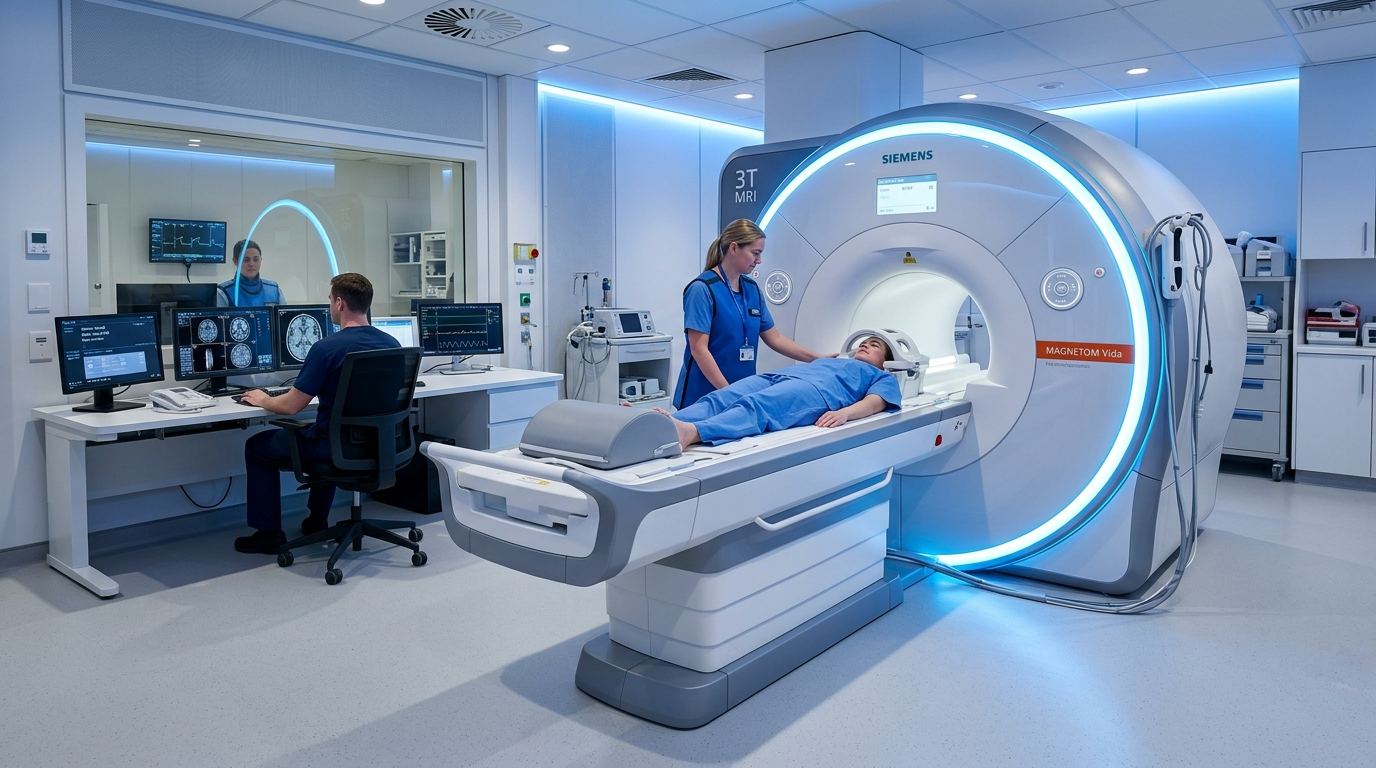
MRI
MRI uses a strong magnet and radio waves, with no radiation, to produce very detailed images of the brain, spine, joints and soft tissues. It takes longer, usually 20 to 45 minutes. Preparation: remove all metal objects and tell us beforehand if you have a pacemaker, metal implants or are pregnant.
DSA (Digital Subtraction Angiography)
The most detailed picture of blood vessels, used for brain aneurysms, Moya Moya disease and stroke, and to guide treatments such as coiling. It is done through a small puncture under local anaesthesia.
All under one roof
NENC Hospital offers MRI, DSA, CT, X-ray, ultrasound, Colour Doppler, ECG, echocardiography, Holter monitoring, TMT and a full pathology laboratory, with emergency scans available 24/7.
Need advice? Our specialists at NENC Hospital, Sonapur, Assam can help. Learn more about our diagnostic services, find a doctor, or call our 24/7 helpline at +91 8638241387.
This article is for general information and is not a substitute for medical advice. Please consult a doctor about your own health.
“We provide excellent medical advice for your good health, utilizing state-of-the-art diagnostic technology and expert compassionate care at NENC Hospital.”
— WILLIAM BLAKE ”