

Moya Moya Disease: What Every Family Should Know
What is Moya Moya disease?
Moya Moya is a rare, progressive condition in which the large arteries at the base of the brain gradually narrow. To make up for the reduced blood flow, the brain grows a network of tiny, fragile vessels. On an angiogram these look like a “puff of smoke”, which is what “moya moya” means in Japanese.
Because these small vessels cannot carry enough blood, people with Moya Moya are at risk of mini-strokes (TIAs), strokes and, in some adults, bleeding in the brain.
Who does it affect?
Moya Moya can appear at any age, but it most often shows up in two groups: children between about 5 and 10 years old, and adults in their 30s and 40s. In children it usually causes episodes of weakness or stroke; in adults it can also cause brain haemorrhage.
Warning signs
- Sudden weakness or numbness on one side of the body, often after crying, blowing or heavy exertion in children
- Repeated “mini-strokes” that come and go
- Difficulty speaking or understanding speech
- Frequent headaches or seizures
- Problems with vision or development in children
Any sudden weakness, speech difficulty or severe headache needs emergency care.
How is it diagnosed?
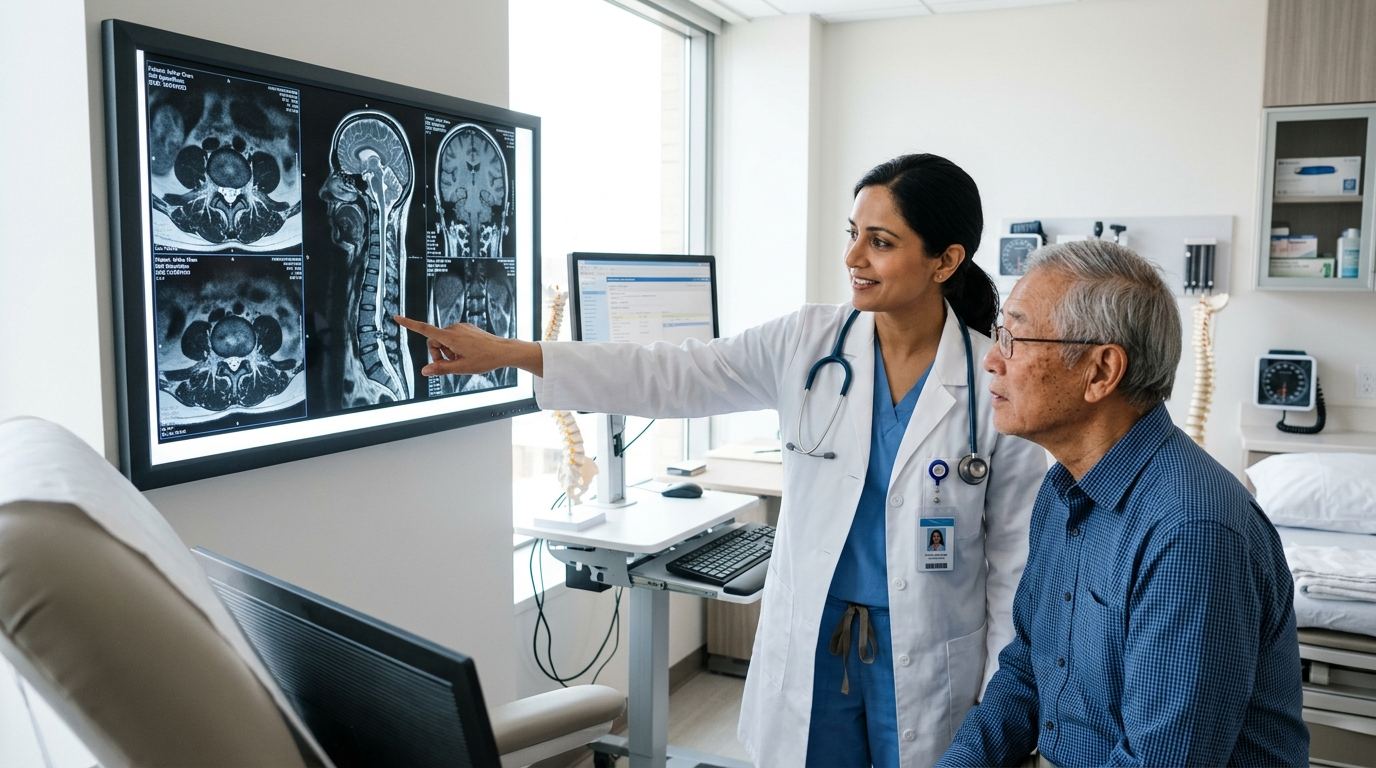
An MRI of the brain shows areas of reduced blood supply or old strokes. Perfusion studies measure how much blood is reaching different parts of the brain. A Digital Subtraction Angiography (DSA) gives the clearest picture of the narrowed arteries and the collateral vessels, and is used to plan treatment.
How is it treated?
Medicines such as blood thinners can lower the risk of clots, but they cannot reopen the narrowed arteries. The main treatment is revascularisation surgery, which brings a new blood supply to the brain:
- Direct bypass (STA-MCA): a scalp artery is connected directly to a brain artery, improving blood flow straight away.
- Indirect bypass: tissue rich in blood vessels is laid on the surface of the brain so new vessels grow into it over the following months.
Many patients have a combination of both. After surgery, most see a significant reduction in further strokes.
The NENC Moya Moya Research Centre
NENC Hospital runs a dedicated Moya Moya Research Centre, where neurosurgeons, neurologists and critical care specialists evaluate each patient together and follow them up over the long term.
Need advice? Our specialists at NENC Hospital, Sonapur, Assam can help. Learn more about the Moya Moya Research Centre, find a doctor, or call our 24/7 helpline at +91 8638241387.
This article is for general information and is not a substitute for medical advice. Please consult a doctor about your own health.
“We provide excellent medical advice for your good health, utilizing state-of-the-art diagnostic technology and expert compassionate care at NENC Hospital.”
— WILLIAM BLAKE ”